AI-Ready Commerce
AI-Ready Commerce for Complex eCommerce
AI in eCommerce is moving fast, but complex catalogs require more than a generic AI layer. WSM helps specification-heavy merchants build on the foundations AI depends on: structured product data, compatibility logic, search precision, catalog quality, and transaction-ready architecture.
AI is not a separate random new thing layered onto the platform. In complex commerce, it is the natural next step in making product data, search intelligence, merchandising, and support more useful, more scalable, and more actionable.

Why AI Matters Now in eCommerce
Complex eCommerce is entering a new phase. As AI becomes more visible across product discovery, support, merchandising, and buying workflows, merchants are asking an important question: what does it actually take to be AI-ready?
For simple catalogs, AI may look mostly like a content or interface layer. For complex eCommerce, it is something deeper. AI becomes more valuable when it is connected to the real operational structure of the catalog.
If product data is inconsistent, compatibility logic is weak, search behavior is noisy, or merchandising lacks control, AI tends to amplify confusion instead of improving outcomes.
That is why AI readiness is not just about adding new tools. It is about making sure the commerce foundation is strong enough to support them, including the structured data, catalog architecture, and operational discipline needed for preparing for agent-assisted buying.
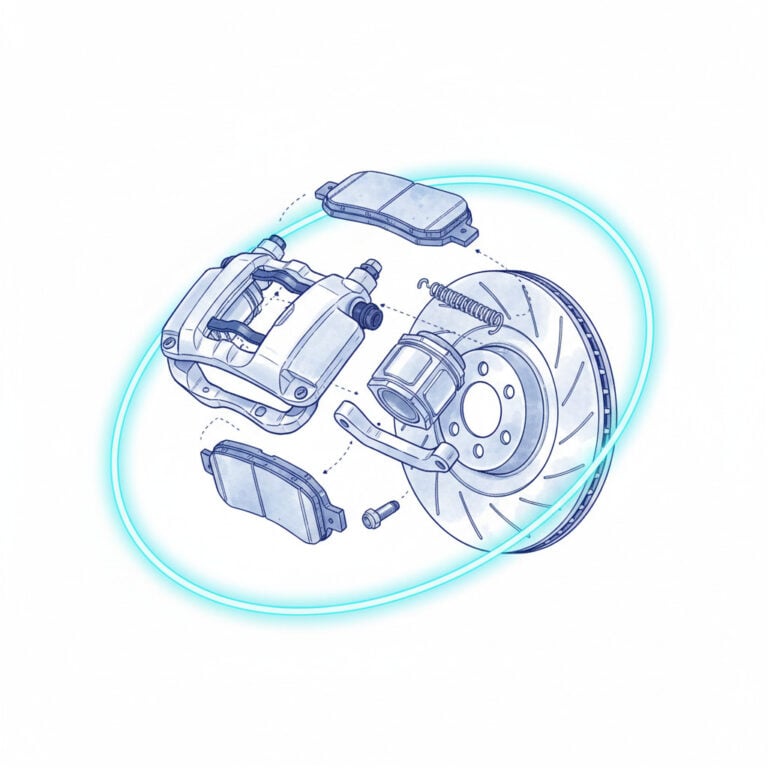

Why AI Is Different in Complex, Specification-Heavy Commerce
Not every product can be purchased with a quick browse and a simple keyword search.
Many merchants operate in environments where product selection depends on fitment, technical specifications, equipment compatibility, attribute matching, account context, or exact-use requirements. In those situations, the wrong purchase is more than a minor inconvenience. It can lead to returns, support tickets, lost time, and lower customer trust.
This is especially true in aftermarket eCommerce and other technical product environments where buyers need help answering questions such as:
- Will this part fit my vehicle?
- Is this component compatible with my equipment?
- Which variation matches my application?
- What is the difference between these similar products?
- Is this the correct option for my account, workflow, or reorder pattern?
These are not just content questions. They are structured commerce questions.
AI in technical and specification-heavy environments needs better source data, stronger product relationships, clearer compatibility logic, and more reliable search behavior than generic retail experiences typically require. That is why AI fitment and compatibility guidance depends on the same operational foundations as fitment and Year Make Model logic. The more complex the buying decision, the more important the underlying platform architecture becomes.
Why Web Shop Manager Is Well Positioned
WSM has long supported the kind of complexity that makes AI more useful and more challenging at the same time.
In automotive aftermarket eCommerce, WSM has helped merchants manage demanding catalog environments shaped by fitment, Year Make Model logic, large SKU counts, structured product data, and exact-match buying expectations. Those are not fringe requirements. They are some of the clearest examples of what modern complex commerce actually looks like.
That experience matters.
Aftermarket is where WSM proved the model, but the bigger story is complex commerce more broadly. The same strengths that support fitment-heavy automotive catalogs also apply to adjacent technical verticals such as truck accessories, diesel performance, off-road, powersports, appliance parts, industrial / MRO, heavy equipment / ag / construction parts, trade supply, medical / lab supply, and other technical catalogs.
WSM’s platform strengths include fitment and compatibility logic, structured product data, search precision, catalog complexity management, hybrid B2B and B2C workflows, merchandising control, and operational readiness. Capabilities such as PartsLogic further strengthen this foundation by helping support intelligent product discovery in complex commerce environments.

Practical AI Use Cases for Complex Commerce
AI in complex eCommerce should be tied to clear operational value. It should help merchants improve discovery, guidance, support, content scalability, merchandising control, and buying confidence in ways that reflect how technical catalogs, account-based workflows, and market-specific buying requirements actually work.
AI Product Search for Complex Catalogs
Improve relevance across synonyms, attributes, autocomplete, and zero-results recovery for large, technical catalogs.
AI Fitment and Compatibility Guidance
Help shoppers make more accurate choices in catalogs where exact-match buying and compatibility logic matter.
AI Catalog Enrichment
Support stronger product data, normalization, and catalog quality for better AI outcomes across search, content, and support.
AI Merchandising
Surface relevant products, related items, and category opportunities with stronger catalog structure and business logic.
AI Support for Product Selection and Order Questions
Reduce friction around fitment, specification, and order-related questions with more guided support experiences.
AI Content Generation
Help scale product content, supporting copy, and structured content workflows across large and technical catalogs.
AI and Returns Reduction
Use better guidance, clearer product understanding, and stronger purchase confidence to help reduce avoidable returns.
Preparing for Agent-Assisted Buying
Build toward machine-assisted buying with cleaner product data, compatibility logic, and transaction readiness.
Headless and Composable Commerce for Aftermarket Catalogs
Run a headless, API-first architecture on a catalog navigated by vehicle, with native Year/Make/Model fitment and managed ACES and PIES workflows.
AI for B2B Commerce
Apply AI-supported discovery, account-based pricing logic, and buying workflows to B2B commerce environments.
AI for B2C Commerce
Strengthen search, discovery, recommendations, and buying confidence in B2C commerce journeys.
AI for Hybrid B2B and B2C Commerce
Run AI-supported discovery and buying for both business buyers and consumer shoppers from the same commerce environment.
AI for Aftermarket Commerce
Explore how AI supports product discovery, guided buying, merchandising, and support in fitment-heavy aftermarket environments.
AI for Industrial, Equipment, and Trade Commerce
Extend AI-ready commerce into adjacent technical verticals where product complexity, application context, and validation matter.
These practical use cases do not exist in isolation. Their value also depends on the commerce environment around them, including hybrid B2B and B2C operations, dedicated B2B or B2C buying models, and market-specific complexity in areas such as aftermarket commerce and industrial, equipment, and trade commerce.

What AI-Ready Commerce Requires
For complex eCommerce merchants, AI readiness is not a buzzword. It is an operational condition.
The merchants most likely to benefit from AI are usually the ones that have already invested in the foundations that make product discovery and buying more reliable. That includes structured product data and standards for complex eCommerce, stronger search and merchandising, and the supporting data structure behind both AI catalog enrichment and AI product search.
Structured Product Data
AI depends on usable product information, including clean titles, meaningful attributes, standardized values, and data models that support search, merchandising, support, and content workflows.
Compatibility and Relationship Logic
Where fitment, applicability, or suitability matters, AI must be supported by clear relationship logic.
Search Precision
Complex catalogs still need synonym strategy, autocomplete support, attribute-aware search, and sensible zero-results recovery.
Catalog Quality and Architecture
AI works better when products are categorized clearly, attributes are normalized, and duplication or inconsistency is reduced.
Merchandising Control
Useful AI experiences still need business logic, not black-box product surfacing.
Support and Answer Readiness
AI support is only as trustworthy as the information behind it.
Transaction Readiness
As machine-assisted buying grows, readiness extends beyond content and discovery into pricing, availability, account logic, and platform reliability.
Industries Where This Matters
AI-ready commerce matters most in markets where product discovery depends on technical accuracy, compatibility context, structured specifications, and buying confidence. WSM’s experience begins with automotive aftermarket and extends naturally into adjacent technical verticals where the same operational challenges show up in different forms.
- Automotive eCommerce
- Truck Accessory eCommerce
- Diesel Performance eCommerce
- Off-Road eCommerce
- Powersports eCommerce
- Appliance Parts eCommerce
- Industrial / MRO eCommerce
- Heavy Equipment / Ag / Construction Parts eCommerce
- Trade Supply eCommerce
- Medical / Lab Supply eCommerce
These categories may differ in terminology and workflow, but they often share the same underlying commerce challenges: complex catalogs, structured specifications, compatibility questions, and a need for more accurate product discovery. That is exactly why AI for Aftermarket Commerce and AI for Industrial, Equipment, and Trade Commerce now deserve clearer, dedicated coverage within the broader AI-ready commerce cluster.
Aftermarket Is the Proof Point, Not the Limit
Automotive aftermarket remains one of the clearest examples of why AI in commerce must be grounded in structure. Fitment, Year Make Model logic, attribute-rich catalog data, and exact-match buying requirements make aftermarket one of the most demanding eCommerce environments to support well.
WSM’s authority in automotive aftermarket is important because it shows the platform was built to handle complexity where the stakes of product accuracy are high. But that experience does not stop at automotive.
The same capabilities that help support aftermarket merchants also matter in appliance parts, industrial / MRO, heavy equipment / ag / construction parts, trade supply, medical / lab supply, and other technical catalogs. In each of these categories, better AI outcomes depend on the same foundational strengths: structured data, search precision, compatibility guidance, and operational readiness.
That is also why the AI cluster now treats aftermarket commerce as a dedicated focus area while separately addressing industrial, equipment, and trade commerce as a related but distinct environment. WSM’s AI story is really a complex-commerce story.
AI as the Natural Evolution of Complex Commerce
For complex eCommerce merchants, AI should not be treated as a disconnected feature or a trend layer added on top of an unstable foundation. It should be viewed as the next step in making product discovery, buying guidance, merchandising, support, and content operations more effective within a platform already built for complexity.
WSM helps merchants create the conditions that make AI more useful:
- Better product structure
- Clearer compatibility logic
- More accurate search behavior
- Stronger merchandising control
- More scalable support and content readiness
- More reliable transaction architecture
That is what AI-ready commerce looks like in practice.
Recent Coverage: The AI Commerce Shift in 2026
The hub above is the long view: what AI-ready commerce requires and why complex catalogs are different. The four pieces below cover the urgent 2026 changes operators are reacting to right now: how AI agents are buying, how the paid acquisition channel is shifting, why catalog data quality is decisive, and why API-first architecture has become table stakes.
-
AI Agents Are Shopping for Your Customers. Can Your Store Take Their Money?
AI agents browse but most ecommerce platforms cannot complete the sale. Why automotive operators will be rewarded for agent-transactable checkout in 2026.
-
The CPC Math Just Changed: AI Is a Paid Acquisition Channel Now
OpenAI launched $60 CPM placements; Google AI Mode ads are live. AI search converts at 4.4x organic. What changes for 2026 ad budgets and how the channel mix is reshuffling.
-
AI Doesn’t Fix Bad Catalog Data. It Amplifies It.
AI tends to amplify confusion when catalog data is weak. Why ACES/PIES discipline, qualifier-level fitment, and supplier-feed automation determine AI commerce success.
-
API-First Was a Nice-to-Have. The Agent Era Makes It Table Stakes.
AI agents need open APIs, not partnership conversations. Why API-first platforms win the agent transaction channel and what “open” actually means in 2026.
Frequently asked questions
What merchants ask when they evaluate what it actually takes to be AI-ready in complex eCommerce.
AI-ready commerce is an eCommerce environment where structured product data, compatibility logic, search precision, catalog quality, and buying-workflow readiness are strong enough that AI capabilities produce reliable outcomes for buyers and operators, not noise on top of weak data.
In simple catalogs, AI often acts as a content or interface layer. In complex eCommerce, it has to interpret fitment, compatibility, technical specs, attribute matching, and account context. Without strong underlying structure, AI tends to amplify confusion rather than improve outcomes.
No. Automotive aftermarket is one of the clearest proof points because of fitment and catalog complexity, but the same readiness requirements apply across truck accessories, diesel performance, off-road, powersports, appliance parts, industrial / MRO, heavy equipment / ag / construction parts, trade supply, medical / lab supply, and other technical catalogs.
Structured product data, compatibility and relationship logic, search precision, catalog quality and architecture, merchandising control, support and answer readiness, and transaction readiness. These are operational conditions, not features.
WSM was built for fitment-heavy, attribute-rich, compatibility-driven catalogs. The platform supports ACES/PIES as first-class data, Year/Make/Model logic, PartsLogic Smart Search, hybrid B2B + B2C workflows, and merchandising control: the foundations AI depends on in complex commerce.
Agent-assisted buying refers to AI agents acting on behalf of buyers: researching, comparing, recommending, and in some cases transacting. It depends on the same foundations as everything else in AI-ready commerce: clean data, structured catalog logic, reliable pricing and availability, and transaction-ready architecture. Learn more.
See how Web Shop Manager supports practical AI across complex eCommerce
Structured product data, compatibility logic, search precision, and scalable buying workflows across B2B, B2C, and hybrid commerce environments: the foundations that make AI actually useful.