Headless / API-First Commerce
Web Shop Manager 6.0 is headless by design — a Next.js storefront talking to a Saleor GraphQL backend over an API. That decoupling is what makes the storefront fast, flexible, and ready for whatever channel comes next.
A modern, API-first architecture without starting from a custom headless build.
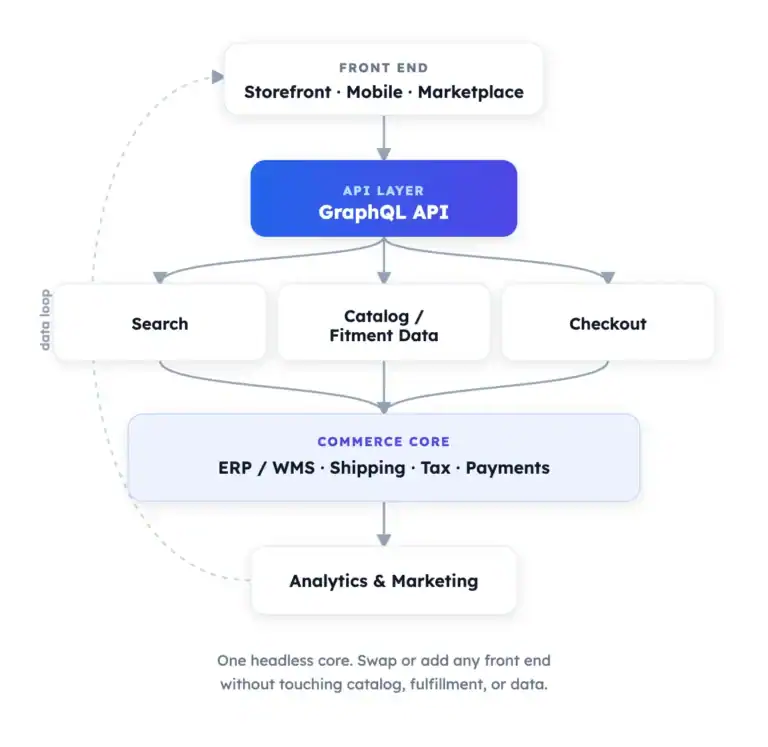
Headless speed and flexibility, without the headless project
Going headless usually means a long, expensive build and a team to maintain it. WSM 6.0 gives you the architecture — a Next.js storefront decoupled from a Saleor GraphQL commerce backend — as a managed platform. You get the performance and extensibility of API-first commerce while we run the plumbing.
- A Next.js storefront decoupled from a Saleor GraphQL commerce backend
- The front end can evolve independently of the commerce engine
- A documented GraphQL API surface for integrations and custom experiences
- Delivered as a managed platform — you get the architecture, not the maintenance burden
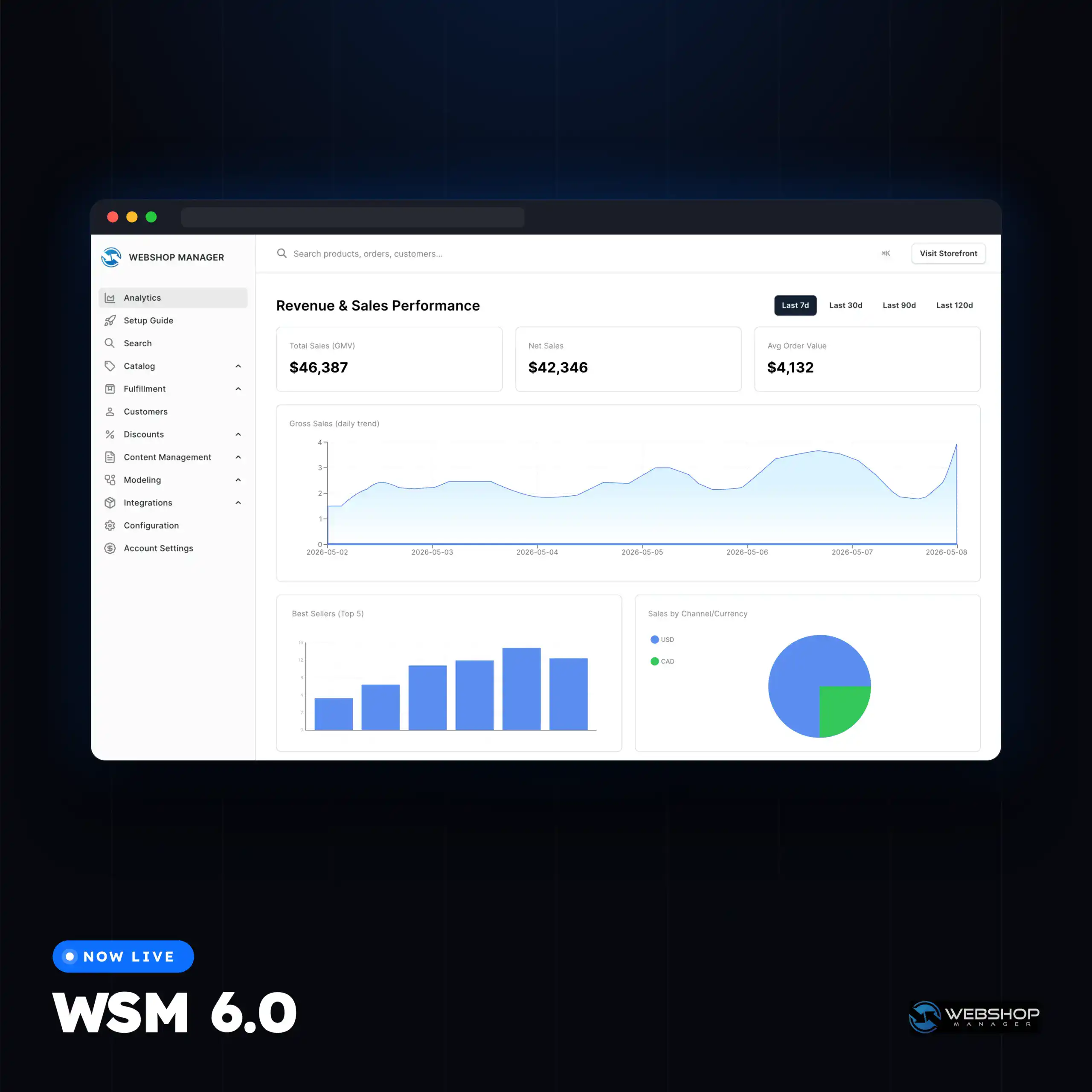
A true decoupled architecture
- The storefront is a Next.js application; commerce logic lives in a Saleor GraphQL backend
- Front end and back end can deploy independently, so many storefront design changes do not require rebuilding the commerce engine.
- JWT authentication with secure, validated session handling
- Per-tenant deployment isolates each store's front end
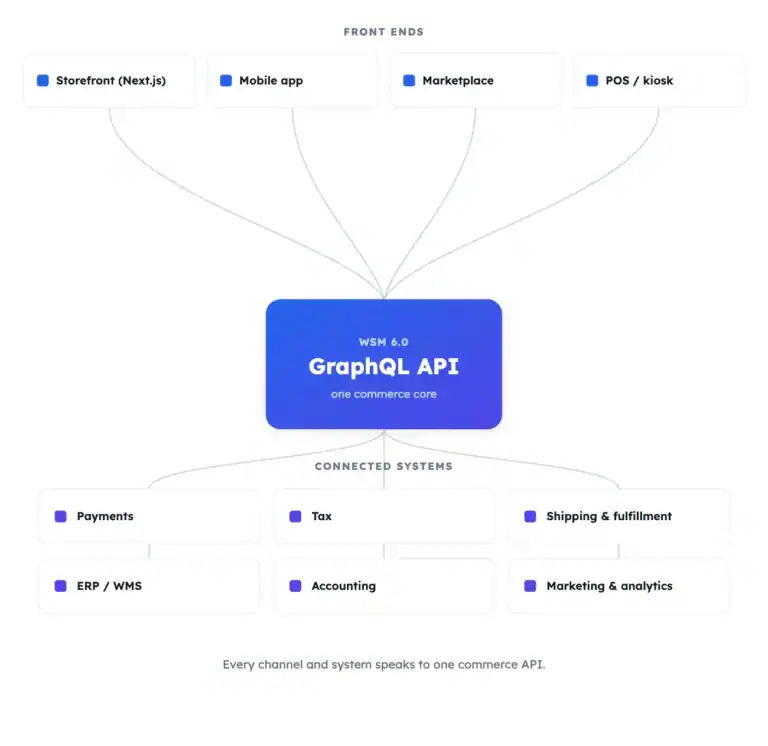
API-first and integration-ready
- A GraphQL API gives developers a single, typed surface to build against
- First-party apps for payments, tax, shipping, and marketing consume the same API
- Connect custom front ends, kiosks, or marketplaces to the same commerce core
- Content and product changes propagate through on-demand cache invalidation
- Product, fitment, kit, and inventory data are queryable through the same GraphQL surface, including ACES application data and PIES product data ingested through Data Services & Standards
A shared core that keeps tenant stores current
- Storefront features live in a shared core consumed by each tenant store
- Improvements to the core propagate to tenant stores through an automated sync
- New capabilities and fixes roll out across the fleet, not one site at a time
- You stay on a modern, maintained codebase instead of a frozen custom build
Explore related eCommerce Platform readiness guides
Keep building your platform story — these readiness guides connect fitment, catalog, search, performance, operations, and commerce capabilities across the eCommerce Platform cluster.
Saleor integrations operated by Web Shop Manager
Headless and API-first is exactly where Saleor fits. Web Shop Manager builds, deploys, and operates the integration layer on top of that core.
Explore: Saleor Integrations hub · Saleor Stripe Integration · Saleor GA4 & GTM · Saleor PartsLogic Search & Fitment
Headless Commerce FAQs
Headless commerce separates the storefront experience from the backend commerce engine. The storefront can be built in modern frameworks like React/Next.js while the commerce layer provides product, checkout, and account functionality through APIs.
WSM 6.0 uses a headless commerce engine (Saleor) with a GraphQL API. Storefronts consume that API for commerce functions, which makes integrations and custom experiences easier to build and maintain.
No. Fitment-first shopping paths still work — the storefront and search layer can keep vehicle context while the commerce API handles cart, checkout, and account workflows.
It can be. A Next.js storefront can use server rendering, pre-rendering, and edge delivery patterns that help improve Core Web Vitals when implemented well.
Not necessarily. WSM ships a managed Next.js storefront foundation and handles the commerce infrastructure, so merchants get headless benefits without having to assemble and operate a custom stack.
A stable API layer makes it easier to connect ERP/accounting systems, shipping and tax tools, analytics, and other operational systems without fragile, one-off storefront hacks.
Yes. Application and product data ingested through Data Services & Standards is queryable through the same GraphQL surface the storefront uses, so vehicle fitment can be requested by an integration, a feed, or an answer engine rather than only rendered on a page. Headless and composable commerce for fitment-driven catalogs covers how that architecture is evaluated against generic composable platforms.

Ready To Grow Your Business?
Ready to grow your aftermarket eCommerce presence and lift conversions across auto, truck, powersports, marine, and more? Connect with
Web Shop Manager for tailored solutions: strategy, platform, and performance in one team.