Aug 5, 2016 | 4 Min Read
A/B Split Testing: Boost Your Profits with Strategic Optimization
Will Split Testing Your Website Make Money Or Waste It?
Split testing isn’t a new marketing concept and has been exceptionally valuable to businesses both off and online. In the past, professionals have used it with sales letters send via snail mail and through ads in the paper.
Oh, how the times have changed!
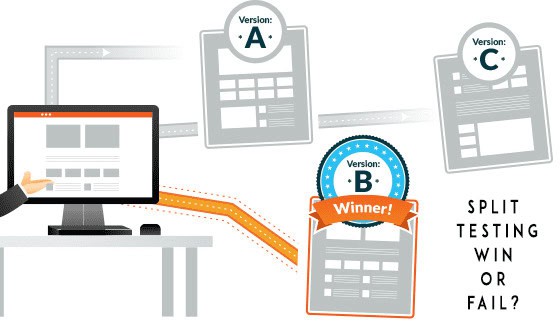
Now, when you run an online SEMA business with a website, you have a tremendous opportunity to improve the way customers engage with your brand. You can test checkout methods, headlines, where you place click-through buttons, and beyond.
And while it may feel like you should jump on board and A/B test everything you do – hit the pause button. Split testing can cost money, customers, and time when not done correctly, or when done too much.
Here are a few aspects to think about before you start running split tests to improve your web design.
Understand how split testing works
Before diving into A/B testing, you should know how it works. Essentially, you are looking for the best performing option out of two choices that you provide your customers.
For example, say you have a 25% conversion rate when you only ask three questions at checkout. You request a shipping address, an email, and the form of payment.
However, you really want to amp up your social media game, so you decide to include a free shipping button if the customer also likes or shares your page on Facebook.
Now, you’re unsure if this will offend people or it will simply be a distraction at those few final (and very touchy) moments during checkout. So, you decide to send half of your traffic to the original web design, and the rest of your customers will go to the one with the social media variant.
After one month, you’ve learned that not only are your conversions up 4% because you’ve given people a way to get free shipping, but your Facebook page is booming!
This gives you the data to make a confident decision to cut the original design and make the variable with social media the new control version.
Define the purpose behind your A/B test
Now that you know how split testing works and have a better idea of why you would utilize it, you should take a moment to define the purpose behind changing your design.
If you have an extremely high conversion rate with your current checkout system, you might not want to distract such a significant portion of customers by bothering them social media cues. You can test this in another part of your web design or get feedback using a different method.
Be mindful in your decisions and always think of your customer’s experience before anything else. There are going to be some ideas that aren’t going to work and the more you push and the longer you test, the more money you’ll watch go out the door.
Focus on one test at time
Split testing is great, and you should take advantage of the customer data you’ll gather, but you need to have a strategy and focus on one thing at a time.
The idea behind this method of marketing is to improve the user experience, and if your variation version has changed multiple elements within the design, you won’t know whether it’s the checkout, the shorter headlines, the updated imagery, or the new page layout that’s making the difference in sales.
Pick one element like shorter headlines. Once you’ve gathered the data and know that shorter and more direct headlines have a higher click-through rate, then move on to the updated imagery, and so on.
Get a grip on costs
Okay, let’s admit it – split testing is not only informative, but it’s fun to get to know your customers a little better. It’s worth the cost of both time and money when you don’t go overboard.
Test what you need to, but also don’t forget the old saying, if it ain’t broke, don’t fix it. If you have a low bounce rate and a high conversion rate, there may be other areas that need attention beyond split testing.
Get more from Web Shop Manager in Google Search:



Get in touch with us
Reach out to us for any inquiries or support, and let’s connect!


More On Related Topic
Explore our highlighted blogs for the latest insights and trends in the industry.
Implementing a New Ecommerce Checkout System: Your Guide to Higher Conversions
Web Shop Manager - New eCommerce Checkout SystemThe new eCommerce checkout system for WSM3 is now live! Completely redesigned and enhanced, this new system features a much easier and faster checkout experience for your...
5 Tactics to Recover Abandoned Cart Sales Now
Recover Abandoned Cart Sales with These 5 TacticsRecover Abandoned Cart Sales with These 5 TacticsYou’ve done everything right. Your store is set up with eye-popping images, your content is fresh and engaging, site speed...
A Look at Ecommerce Statistics: Trends and Data You Need to Know
Web Shop Manager - eCommerce StatisticsUtilize the Growth of eCommerce and Start Selling Online!Often research is not meant to necessarily inform us. Rarely do we come across research where there isn’t a moment of...

Ready To Grow Your Business?
Ready to grow your aftermarket eCommerce presence and lift conversions across auto, truck, powersports, marine, and more? Connect with
Web Shop Manager for tailored solutions: strategy, platform, and performance in one team.